
Planning a trip is exciting, but for dog owners, the moment you start packing that suitcase, there is usually a shadow of guilt that creeps in. Your dog probably senses it before you do. That tail slows down, they stick closer than usual, and somewhere in the back of your mind you start running through every possible scenario of what could go wrong. Leaving your dog while on vacation does not have to be a stressful experience for either of you, but it does require real planning, honest thinking about your dog’s personality, and choosing care that actually fits their needs rather than just whatever is most convenient.
This is not a one-size-fits-all situation. A high-energy border collie with separation anxiety needs something very different from a calm, older labrador who sleeps most of the day. Getting this decision right matters, and there are more options available now than there used to be.
Knowing Your Dog Before You Make Any Plans
Before you search for dog boarding near you or start asking friends if they can help out, spend some time thinking clearly about your dog’s actual temperament and health status. Dogs with reactive behavior around other animals are not good candidates for open-play kennels, no matter how well-reviewed the facility is. A dog who has never been left alone overnight may struggle more than you expect. Older dogs with medication schedules, dogs with food sensitivities, or dogs recovering from surgery need care that accounts for those specific needs.
Separation anxiety is real and it is not just a dog being dramatic. Signs include destructive behavior, excessive vocalization, refusal to eat, and in some cases physical symptoms like vomiting or diarrhea when the owner leaves. If your dog already shows signs of anxiety when you step out for a few hours, being left in an unfamiliar place for a week will be genuinely difficult for them. You can read our tips on managing severe dog anxiety to learn how to keep them calm when they feel overwhelmed. Knowing this in advance lets you make better choices, like hiring a sitter who will stay in your home rather than moving your dog to a new environment.
Dog Boarding Versus a Pet Sitter: The Real Differences
Dog Boarding Versus a Pet Sitter: The Real Differences
This is the question most people wrestle with, and the honest answer is that both options can be excellent or terrible depending on execution.
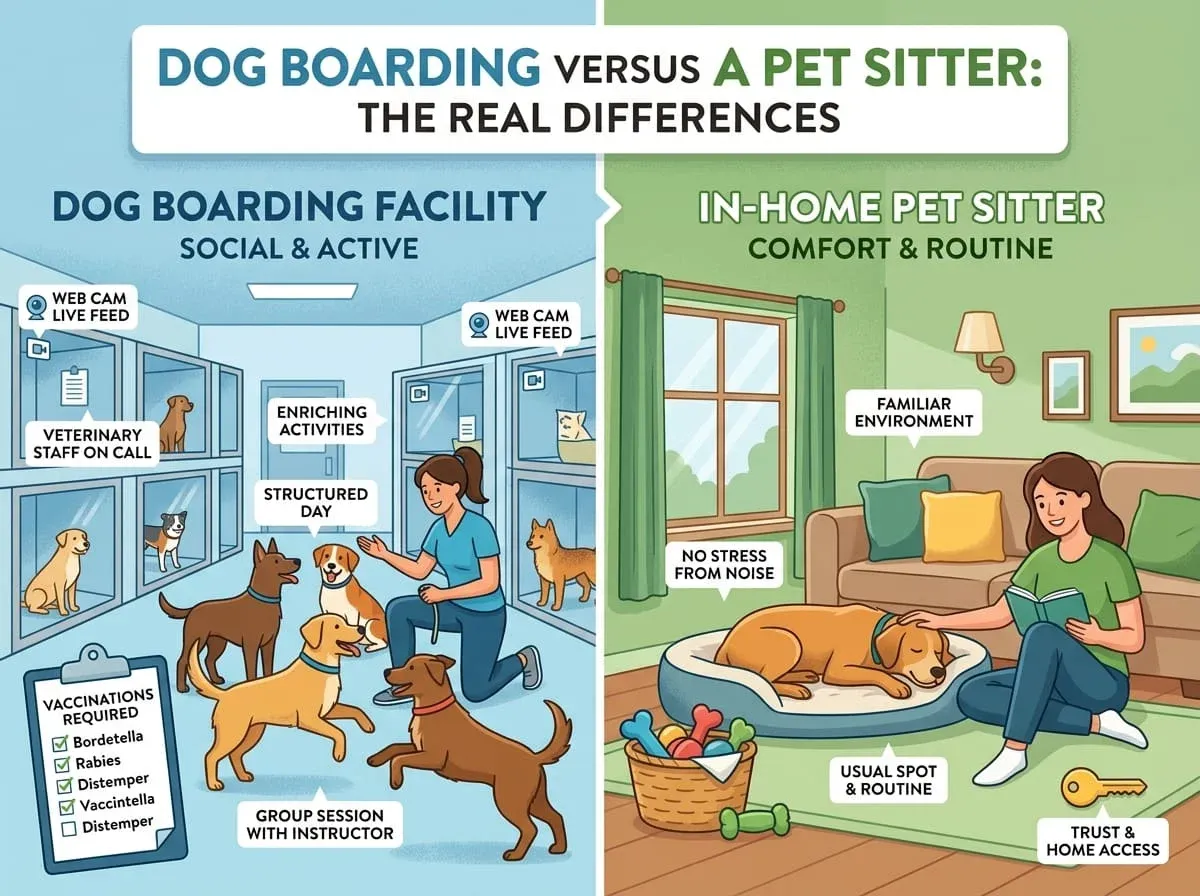
Dog boarding facilities, sometimes called dog hotels or kennels, range from basic overnight-only operations to full-service setups with individual suites, webcams, group play sessions, and veterinary staff on call. If your dog is social, well-vaccinated, and comfortable around other dogs, a quality boarding facility can actually be enriching. They are around people and activity, there is structure to the day, and you can often check in via app or camera.
The downsides of kennels are worth acknowledging. Some dogs find the noise stressful. Illness can spread through facilities, which is part of why vaccination requirements for dog boarding exist and why you should confirm your dog is up to date on bordetella, rabies, distemper, and any others the facility requires before you even book. A dog who has never been boarded before may take a few days just to settle in, which can be a significant portion of a short trip.
In-home dog sitting, where a sitter either stays at your house or visits multiple times per day, keeps your dog in their familiar environment. Their scent is on the furniture, they sleep in their usual spot, and their routine stays largely intact. For dogs prone to anxiety, this is often the better choice. The trade-off is that you are trusting someone inside your home, and finding a sitter you genuinely trust takes more effort than booking a kennel slot.
Dog day care, where your dog is dropped off during the day and comes home at night, works well for owners who have a friend or family member who can handle evenings and mornings. It is not always cheaper than boarding, but for social dogs it provides company and stimulation without an overnight separation from home.
Leaving Your Dog with Family or Friends
For many people, a trusted family member or close friend is the first and most comfortable option. There is something genuinely reassuring about leaving your dog with someone who already knows them, and your dog may already have a relationship with that person.
That comfort can become a problem if you assume familiarity means no preparation is needed. Even someone who loves your dog needs specific information. Prepare a written document that covers feeding times and portions, any medications including exact doses and timing, your dog’s quirks and triggers, the vet’s name and contact number, an emergency contact for yourself, and what to do if something goes wrong. A dog care agreement does not have to be formal or legalistic. It just needs to be clear enough that the person caring for your dog can handle a problem without panicking.
Be honest about your dog’s behavior. If they guard food around strangers, or tend to bolt for the door, or have a history of aggression in certain situations, the person helping you needs to know this. Assuming your dog will be fine because they are usually fine at home is one of the more common mistakes people make before traveling.
What to Tell and Give Your Dog’s Sitter
Whether you are using a professional service or a friend, the information you provide before you leave is one of the most important things you can do. Think about what your vet would want to know in an emergency and make sure that same information is with the sitter.
At a minimum, write down your dog’s daily schedule, including walk times and length. You can cross-reference our dog walking exercise recommendations to make sure your dog is getting the right amount of daily stimulation. Include every food item they eat, down to treats, because some dogs have genuine allergies and sitters who do not know this may give something well-intentioned but harmful. Note your dog’s typical bathroom habits so the sitter recognizes if something changes. Write down what your dog is afraid of, whether that is fireworks, loud trucks, or the neighbor’s cat, and what helps.
Pack enough of your dog’s regular food for the entire trip plus a few extra days. A sudden food change during an already stressful period is a recipe for an upset stomach. If your dog is on a specialized diet, such as a grain-free dog food formula, make sure you leave enough to prevent the sitter from running out. Include their regular leash, their collar with ID tags that have a current phone number, any medications with clear written instructions, their usual bedding or a worn t-shirt with your scent on it, and a familiar toy. Some dogs do better with a worn item of clothing from their owner nearby. It sounds small but it can make a genuine difference for anxious dogs.
Leave two emergency contacts with the sitter: your own number and a backup who can make decisions if you are unreachable. Be clear about your authorization level for veterinary care. If something happens and your dog needs treatment, does the sitter have the authority to approve it? Does your vet have the sitter’s name on file as an authorized contact? These are questions to sort out before you leave, not after.
Questions Worth Asking a Professional Sitter or Boarding Facility
If you are using someone you do not already know well, the conversation before you commit matters more than the website or the number of five-star reviews. Ask how many dogs they will be caring for at the same time. Ask what happens during an emergency and which vet they would use. Ask about their experience with dogs that have anxiety or behavioral quirks. Ask whether they are insured and bonded.
For boarding facilities, ask specifically how dogs are grouped for play, whether they separate by size and temperament, what the ratio of staff to dogs is, and whether there is someone on the premises overnight. Ask how they handle a dog that becomes unwell. A good facility will answer all of this confidently without hesitation. If someone gets defensive or vague when you ask basic safety questions, that tells you something.
Some professional sitters offer an initial meet-and-greet with your dog before the booking is confirmed. If that option is available, take it. Watch how your dog responds. Some dogs click with certain people and are indifferent to others, and that initial reaction is useful information.
How to Reduce Your Dog’s Stress While You Are Away
How to Reduce Your Dog’s Stress While You Are Away
There are practical things you can do in the weeks before you travel that will make the transition easier for your dog. If you are using a boarding facility, consider a trial overnight stay before your actual trip so the environment is not completely new. If a sitter is coming to your home, have them visit a couple of times while you are still there.
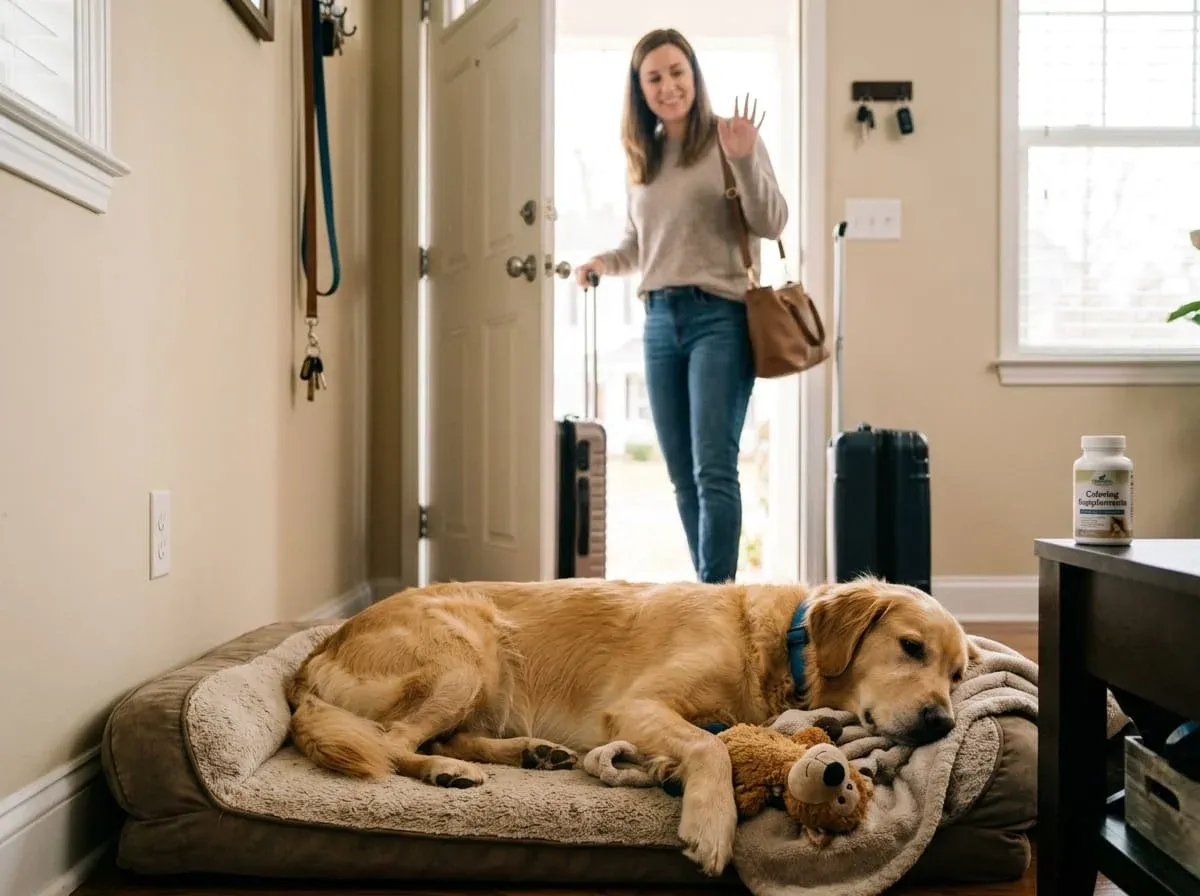
Maintain your dog’s routine as much as possible in the days leading up to your departure, and avoid overly emotional goodbyes at the door. Dogs pick up on their owner’s anxiety, and a prolonged, tearful farewell can actually increase their distress. A calm, matter-of-fact departure followed by a genuinely happy reunion when you return is better for them in the long run.
Exercise helps. A well-exercised dog is a calmer dog, and making sure they get proper activity before a handoff tends to reduce the initial restlessness of a new situation. Some veterinarians recommend calming supplements for dogs with known anxiety, and if your dog has a serious anxiety history it is worth a conversation with your vet before the trip rather than scrambling for solutions the night before you leave.
Affordable Options When Budget Is a Concern
Dog care costs vary enormously depending on where you live and what type of care you choose. Basic kennel boarding tends to be the most affordable professional option in most areas, though pricing climbs quickly for premium facilities. In-home sitters generally charge more because they are providing more individualized attention and, in many cases, staying in your home.
Reciprocal arrangements with other dog owners you trust can work well and cost nothing. If you have a neighbor or friend in a similar situation, an informal swap where you cover each other’s trips can be genuinely valuable. The key is making sure the other person’s dog is compatible with yours, and that you both have the same level of care in mind.
Online platforms that match dog owners with local sitters have made it easier to find affordable help, but vet the sitters carefully. Read reviews that mention specific situations rather than just generic praise, and always have a direct conversation before committing.
Common Mistakes to Avoid Before You Travel
Booking last minute is at the top of the list. Good sitters and quality boarding facilities fill up quickly, especially around school holidays and summer travel seasons. Giving yourself at least a few weeks, and ideally more, means you have actual options.
Assuming your dog will just adapt is another one. Some dogs are genuinely flexible and thrive anywhere. Others need careful preparation and the right environment. Know which kind of dog you have.
Forgetting to update your dog’s ID tag is a mistake that costs nothing to fix and can be genuinely critical if something goes wrong. Before you travel, confirm that your dog’s collar tag has a current phone number, and if your dog is microchipped, verify that the registration details are up to date with a working contact number.
Failing to leave clear written instructions, assuming a quick verbal rundown is enough, is one of the most common and easily avoided problems. People forget things under stress. Write it down.
Bringing It All Together Before You Leave
The difference between a trip where you spend every spare moment worrying about your dog and one where you can actually relax usually comes down to preparation. Choosing the right care option for your specific dog, providing whoever is helping with the information they actually need, planning for emergencies before they happen, and thinking about your dog’s comfort and routine rather than just logistics makes a real difference.
Leaving your dog while on vacation is a normal part of life for dog owners, and when it is done thoughtfully, dogs generally manage far better than their owners expect. The guilt is understandable, but it is not always well-founded. A dog who is well cared for, in a safe environment, with people who know what they are doing, can be perfectly content while you are gone. The preparation you do before you leave is what makes that outcome likely.